
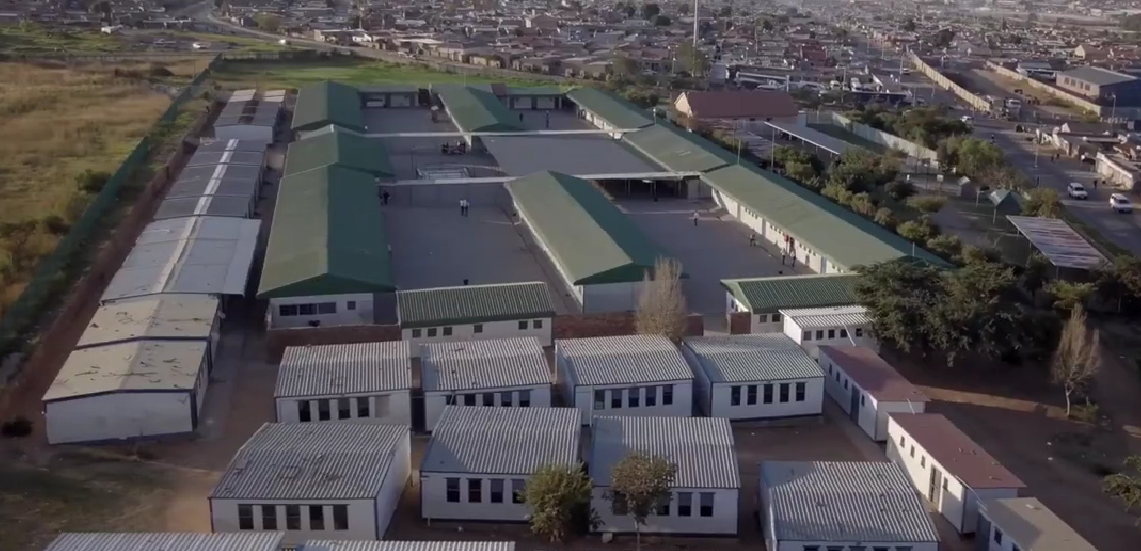
Two Decades of Social Impact
The Founding of Phomolong Secondary School
In many communities, the establishment of a school represents far more than the construction of classrooms. It signals investment in the future, the expansion of opportunity, and the strengthening of social development. The founding of Phomolong Secondary School in 2006 in Tembisa, within Gauteng, South Africa, reflects this broader purpose. Since opening its doors, the school has served as an important educational institution for learners in the Phomolong Section of Tembisa, contributing to academic advancement and community development.
Establishment in 2006
According to available education records, Phomolong Secondary School began operating on 8 February 2006. The school was established as a public secondary school, operating under the administration of the Gauteng Department of Education.
Its creation formed part of the broader expansion of educational infrastructure in Gauteng during the early 2000s. As communities such as Tembisa continued to grow, the demand for additional secondary school spaces increased. Establishing new schools helped ensure that learners could access education closer to where they lived.
From its inception, the school was designed to provide education for Grades 8 through 12, covering both the Senior Phase and the Further Education and Training (FET) Phase of South Africa’s basic education system.
Location Within the Phomolong Community
Phomolong Secondary School was established in the Phomolong Section of Tembisa, a residential area within the Ekurhuleni Metropolitan Municipality.
The school’s physical address is recorded as:
2847 Maduna Street
Phomolong Section
Tembisa
Kempton Park
Gauteng
South Africa
Its location places it within walking distance for many learners in the surrounding neighbourhoods. Schools in township communities often serve as central social institutions, providing not only education but also a shared space for youth development and community engagement.
A Public No-Fee School
Phomolong Secondary School is classified as a public Quintile 3 school, which means it falls within the category of schools serving communities with relatively limited socio-economic resources.
Schools in this category are typically designated as no-fee schools. This policy ensures that learners from households that may not be able to afford school fees can still access secondary education. The funding for such schools primarily comes from government allocations through the provincial education department.
The no-fee school model plays a significant role in improving educational access across South Africa, particularly in historically disadvantaged communities.
Building Educational Access in Tembisa
The founding of Phomolong Secondary School helped expand educational opportunities within Tembisa. The township is one of the most densely populated urban communities in Gauteng, and the availability of secondary school spaces has historically been an important issue for residents.
By opening in 2006, the school helped accommodate growing numbers of learners transitioning from primary school to secondary education. This expansion supported the broader goal of improving access to quality education within the region.
For many learners in the area, the presence of a local secondary school meant shorter travel distances and increased access to structured learning environments.
Early Growth and Development
In the years following its establishment, Phomolong Secondary School experienced steady growth in enrolment. Like many township secondary schools, it developed its academic programmes in alignment with the National Curriculum Statement and later the Curriculum and Assessment Policy Statement (CAPS) used across South Africa.
The school provides instruction in a range of subjects typical of South African secondary education, including languages, mathematics, sciences, humanities, and commercial subjects. Through these programmes, learners prepare for the National Senior Certificate (NSC) examinations at the end of Grade 12.
As enrolment increased, the school’s teaching staff expanded as well, reflecting the need to support growing learner numbers and maintain manageable classroom environments.
Two Decades of Social Impact
Since its founding in 2006, Phomolong Secondary School has spent nearly two decades contributing to the educational development of young people in Tembisa. Schools such as this play a crucial role in shaping communities by preparing learners for higher education, vocational training, and participation in the broader economy.
Over the years, the school has produced multiple matric classes and has achieved notable academic successes. Among these achievements was a 100% matric pass rate in 2014, as well as recognition as one of the top-performing schools in the Ekurhuleni North district in the 2021 matric examinations.
These accomplishments illustrate how an institution that began serving a local community has grown into a school capable of producing strong academic outcomes within the provincial education system.
Education as a Community Asset
The establishment of Phomolong Secondary School reflects a broader principle in South African education: schools function not only as places of instruction but also as community assets.
For families in the Phomolong area, the school provides:
- Access to secondary education close to home
- A structured environment for youth development
- Opportunities for academic achievement and future career pathways
Over time, schools become embedded in the social fabric of their communities, shaping generations of learners and contributing to long-term social progress.
Conclusion
The founding of Phomolong Secondary School on 8 February 2006 marked an important step in expanding access to secondary education in Tembisa. Established as a public institution under the Gauteng Department of Education, the school was created to serve learners from the surrounding community and provide a pathway to academic and personal development.
Nearly two decades later, the institution continues to play a significant role in educating young people in the Phomolong area. Its story illustrates how the establishment of a single school can contribute to lasting social impact—one learner, one class, and one generation at a time.
